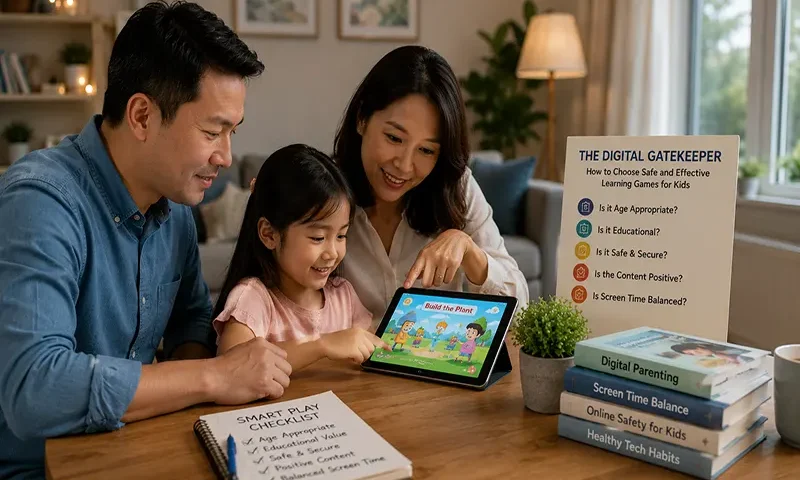
The Digital Gatekeeper: How to Choose Safe and Effective Learning Games for Kids

For the modern parent, the tablet is a paradox. On one hand, it is a portable library, a creative studio, and a personalized tutor. On the other, it is a gateway to a digital landscape often designed to capture attention, harvest data, and monetize your child’s engagement.

The goal isn’t to banish the tablet, but to become an “informed curator.” By moving from passive screen-time managers to active digital gatekeepers, you can ensure that the games your child plays are not just entertaining, but genuinely supportive of their development—all while keeping their privacy and safety intact.

The “Safe-Tech” Checklist: An Evaluation Framework

Before you hit “download” on the latest “top-rated” learning app, run it through this four-part evaluation. If an app fails on the first point, you can save yourself the time of even looking at the rest.

1. Privacy and Data Security

Privacy is the bedrock of safety. Many “free” apps are actually data-harvesting tools.

  • Check for COPPA Compliance: Look for explicit statements that the app is COPPA (Children’s Online Privacy Protection Act) compliant.
  • The “Data Safety” Label: In the app store, scroll to the “Data Safety” section. Does the developer collect location data? Do they share it with
READ MORE ...
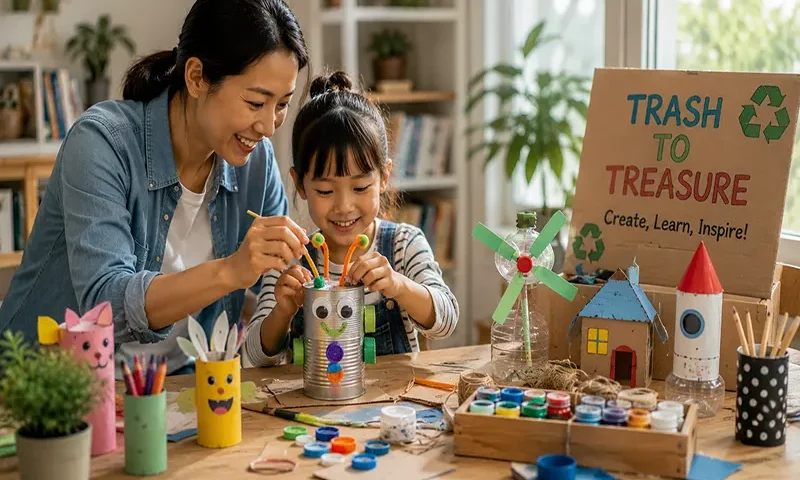
Trash to Treasure: Budget-Friendly Learning Crafts Using Recycled Materials

In the modern household, the recycling bin is often viewed as a place to discard unwanted clutter. But for a child, that same bin is a goldmine. When we view “trash” through the lens of potential, we transform a simple yogurt cup or a discarded cardboard tube into a laboratory for engineering, art, and scientific discovery.

“Recycled crafting” is more than just a way to save money on expensive art supplies; it is a powerful educational philosophy. It teaches children to look at the world with an investigative eye, fostering resourcefulness, environmental stewardship, and the critical thinking skills needed to turn ordinary objects into extraordinary tools.

The “Educational Lab” Approach: Four Pillars of Play

To get the most out of your recycled materials, try organizing your projects into four specific learning pillars. This ensures that every craft serves a deeper educational purpose beyond just “keeping them busy.”

1. Engineering & Physics (Construction)

Cardboard, plastic containers, and bottle caps are the ultimate building blocks. They teach children the fundamentals of structural integrity, balance, and weight distribution.

2. Scientific Inquiry (Experiments)

Use household “junk” to test theories. Can a toilet paper roll be a telescope? Can a yogurt cup be a telephone? … READ MORE ...