
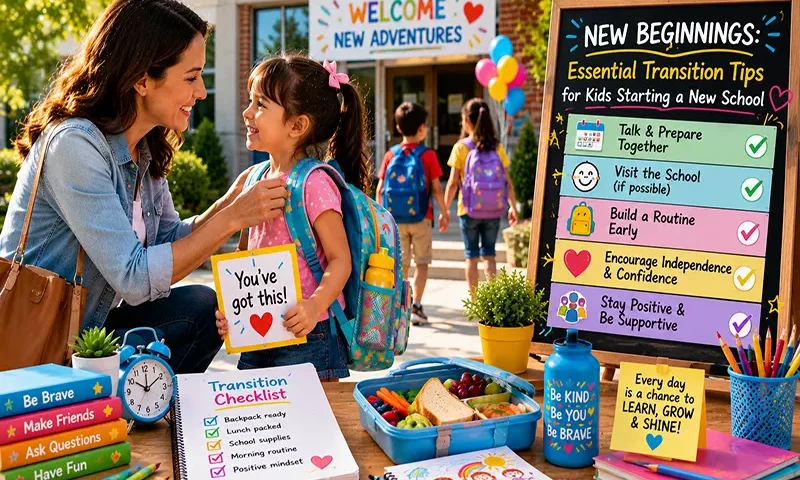
A new school year is often framed as a fresh start, but for a child, it can feel like stepping onto a different planet. Whether you are moving across the country, switching school systems, or simply trying a new environment for better fit, the transition to a new school is one of the most significant life events a child can experience.
While it is normal for parents to feel anxious about how their child will adapt, it is helpful to remember that transitions are not just challenges—they are opportunities for your child to build resilience, flexibility, and new social muscles. By approaching the move as a process rather than a single “first day,” you can turn potential stress into a foundation for growth.
The “Pre-Transition” Phase: Preparation is Power
The work of a successful transition begins weeks before the first school bus arrives. Children thrive on predictability, so the goal is to make the “unknown” feel a little more familiar.
- Visit and Explore: If possible, walk the grounds, visit the playground, and locate the classroom or cafeteria. If you can’t visit in person, look at the school’s website together. Seeing the environment helps the brain begin to map out the new daily experience.
- Meet the Teacher: A brief “hello” can demystify the adult who will be in charge of their day. It provides a familiar face for your child to look for on that first morning.
- Normalize “The Jitters”: Don’t dismiss their worries with “you’ll be fine!” Instead, validate them: “It is completely normal to feel nervous about meeting new friends. Even adults feel that way when they start a new job.” Giving them space to express their nerves prevents them from bottling them up.
The “Early Days” Strategy: Building a Safe Harbor
The first two weeks are often the most demanding. Your child will likely come home exhausted from the cognitive load of learning new rules, names, and routes.
- The “Safe Harbor” Routine: Consistency at home is your child’s most valuable tool for navigating chaos at school. Keep morning and evening routines identical to what they were before. A predictable bedtime and a steady morning rhythm provide a sense of stability that helps them “reset” after a day of newness.
- Mastering the “Check-In”: When kids come home from a new school, they are often “talked out.” Asking “How was your day?” usually results in a grunt. Instead, try specific, open-ended questions:
- “What was the most interesting thing you saw in the classroom today?”
- “Who did you sit by at lunch?”
- “What is one rule that is different here than at your old school?”
- “Did anything make you laugh today?”
Social & Emotional Support: Navigating the Friendship Gap
The “friendship gap”—the period before a child feels fully connected to peers—is the hardest part of a new school. Here is how to support them without taking over:
- Focus on Interests, Not Popularity: Encourage your child to join one club or extracurricular activity where they can meet kids with shared interests. It is easier to make friends when you are both focused on a shared task—like coding, soccer, or art—rather than just trying to strike up a conversation in the hallway.
- Watch for “Transition Stress”: It is normal for a child to be a bit quieter or slightly more emotional during the first month. However, look for “red flags” that go beyond typical adjustment: significant changes in sleep, refusing to go to school, or intense physical symptoms like recurring stomachaches. If these persist, reach out to the teacher or counselor.
- The Power of Proximity: If you see an opportunity, help facilitate a playdate after school. Sometimes, taking one friendship from the classroom into the “neutral territory” of a park or your home is the bridge they need to feel part of the group.
Building a Collaborative Partnership
You are the expert on your child; the teacher is the expert on the classroom. A healthy partnership between you and the teacher is the best safety net a child can have.
- The “Communication Bridge”: Early in the term, send a brief, positive email to the teacher. “We are so excited for [Child’s Name] to be in your class. We are focusing on helping them transition to the new routine, so please let us know if you see them struggling or if there’s anything we can do at home to support their adjustment.”
- Trust the Process: Teachers are seasoned professionals at welcoming “the new kid.” They often have strategies in place—like assigning a “buddy” to help them navigate the first few days—that you might not be aware of. Give the school time to work its magic.
The Parent’s Transition Toolkit
| Stage | Goal | Action Item |
| Preparation | Familiarity | Walk the route/visit the school grounds. |
| Opening | Validation | Talk openly about “first-day nerves.” |
| Settling In | Consistency | Maintain strict, comforting home routines. |
| Integration | Connection | Facilitate one interest-based activity. |
| Partnership | Collaboration | Send a friendly, proactive email to the teacher. |
A Note on Patience
Transitions do not happen overnight. Some children integrate within a week; others may take a full semester to find their stride. Both are normal. Your most important role during this period is to be a calm, non-anxious presence.
When your child sees that you are confident in their ability to handle this change, they will eventually borrow that confidence for themselves. Remind them—and yourself—that starting fresh is a brave act. Every time they step onto that campus, they are practicing how to navigate a new world. That is a skill they will carry with them for the rest of their lives.

