
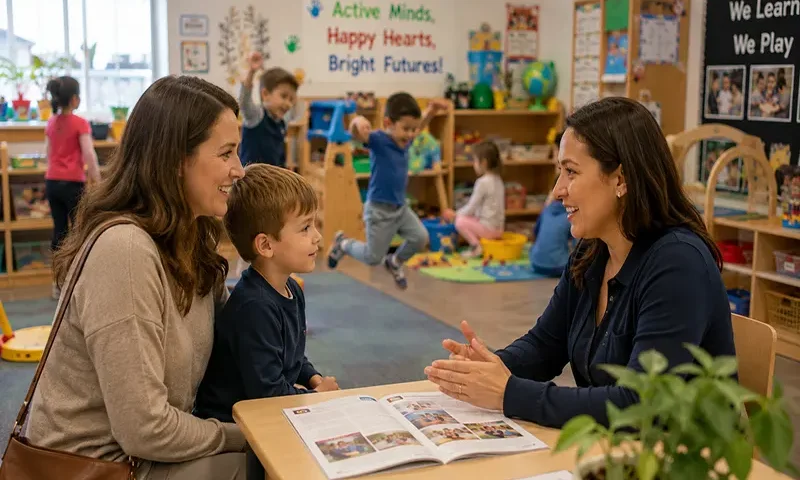
For many parents, the search for a preschool feels like a high-stakes scavenger hunt. When you have a child who seems to be powered by a perpetual motion machine—a child who learns by climbing, running, and exploring rather than sitting still—the pressure intensifies. You aren’t just looking for a “good” school; you are looking for a place that views your child’s boundless energy as an asset, not a behavioral challenge to be corrected.
Finding the right preschool for a high-energy child is about finding a “goodness-of-fit.” It is not about finding the “best” school on paper, but the one whose philosophy and environment align with how your child experiences the world.
Understanding the “High-Energy” Learner
First, let’s reframe the narrative. A high-energy child is often a child who is deeply engaged with their environment. They are sensory seekers who process information through movement. In a traditional, desk-heavy, or overly rigid setting, these children are often mislabeled as “disruptive.” However, in the right environment, that same energy becomes the fuel for intense curiosity, problem-solving, and social leadership.
When you visit schools, look for environments that provide structured movement—opportunities for your child to channel their energy into productive, play-based learning.
Matching Philosophy to Temperament
Not all preschool models are created equal when it comes to active learners. Here is how different pedagogies typically respond to high energy:
- Forest or Outdoor Schools: These are often the “gold standard” for high-energy children. Learning happens outside, where the sky is the ceiling. Nature naturally allows for large, gross-motor movements, and the lack of walls reduces the feeling of being “contained.”
- Reggio Emilia: This approach views the child as a researcher. The classroom environment (the “third teacher”) is designed to be provocative and exploratory. It allows for movement between different “stations” of learning, which is perfect for children who struggle to sit through long, teacher-led circle times.
- Play-Based Programs: These schools prioritize social-emotional development through child-led play. Because play is the curriculum, there is an inherent flexibility that allows active children to move, build, and negotiate with peers without the rigid constraints of a lecture-based model.
- Montessori: While highly structured, Montessori can be excellent for some high-energy children because it allows them to move freely from one “work” station to another. However, ensure the school is a “true” Montessori environment that respects the child’s need to work at their own pace, rather than a more rigid interpretation.
What to Look for During a Tour
When you step inside a classroom, ignore the brochures for a moment and look at the physical realities of the space.
1. The Environment
- Access to the Outdoors: Does the classroom have a direct exit to a playground? How often are they outside? A high-energy child needs frequent “re-sets.”
- The “Vibe”: Is the room cluttered? For an active child, visual overstimulation can lead to meltdowns. Look for organized, purposeful spaces.
- Flexible Seating: Is everyone glued to a chair at a table? Or are there floor rugs, standing desks, and cozy reading nooks where a child can move while they engage?
2. Observing the Teachers
Watch how the teachers handle the natural flow of the room.
- The Redirection: Does the teacher respond with a “sit down and be quiet,” or a “I see you have a lot of energy; would you like to help me carry these books to the shelf?”
- The Tone: A great teacher for a spirited child is one who uses a calm, firm, but warm voice. If you see teachers who look frazzled or annoyed by movement, that is a warning sign.
Critical Questions for Administrators
When you meet with the director, ask questions that force them to move past their marketing talking points:
- “How do you handle transitions?” (Transitions are often when high-energy kids struggle most. Look for schools that use songs, physical cues, or countdowns rather than just demands for compliance.)
- “What is your approach to outdoor play during inclement weather?” (If the answer is “we stay inside when it’s drizzling,” that’s a red flag for a high-energy child.)
- “How much of the day is structured vs. child-led free choice?” (Active learners need a higher ratio of free choice to allow them to self-regulate.)
- “How do you help children learn to regulate their own energy levels?”
- “What happens if a child has a hard time sitting during circle time?” (The ideal answer involves a non-punitive approach, like having a sensory fidget or a specific area where they can move and still listen.)
Recognizing the “Red Flags”
Trust your gut, but also keep an eye out for these indicators that a program might be too restrictive:
- The “Worksheet” Culture: If you see piles of identical coloring pages or worksheets in the classroom, be cautious. These require a level of sedentary focus that may stifle your child.
- The Silence Standard: If the room is unnervingly quiet, or if teachers pride themselves on “perfectly behaved, seated children,” it is likely the wrong environment for a child who processes the world through motion.
- Rigid Compliance: If you are told that children “must” participate in every group activity exactly as instructed, your child may spend their year being labeled “defiant” simply for being themselves.
The Final “Gut Check”
Ultimately, observe your child. If you are allowed a “stay-and-play” or a short observation window, watch how they react. Do they seem engaged, or do they seem like they are fighting a losing battle against the furniture?
The right preschool isn’t one where your child will magically become “calm.” It is the place where their energy is treated as a form of intelligence—a place where they are encouraged to run, to climb, and to discover, and where they are taught how to harness that intensity to become a lifelong learner. Trust your intuition; you know your child better than any assessment or brochure ever will.

