
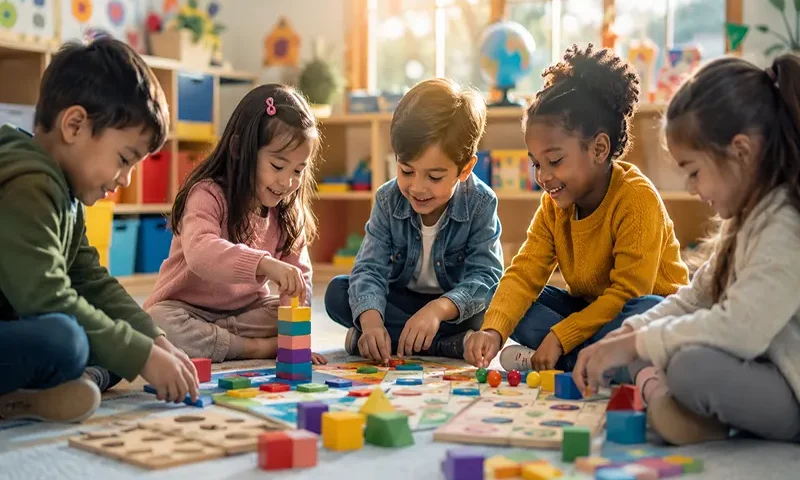
Mathematics is one of the most important subjects children begin learning in kindergarten. Early math skills help young learners develop problem-solving abilities, logical thinking, and confidence in handling numbers. However, traditional worksheets and repetitive drills can sometimes make learning feel boring for young children. This is why fun interactive math learning games for kids in kindergarten have become increasingly popular among parents and teachers.
Interactive games transform math lessons into exciting adventures where children can learn while having fun. Through play-based learning, kindergarteners can build strong math foundations without feeling pressured. Let’s explore the benefits of interactive math games and discover some of the best activities that make learning enjoyable.
Why Interactive Math Games Are Important
Young children learn best through hands-on experiences and active participation. Interactive math games engage multiple senses, helping children understand mathematical concepts more effectively. Instead of simply memorizing numbers, kids can see, touch, move, and manipulate objects while learning.
Some key benefits of interactive math games include:
- Improving number recognition
- Developing counting skills
- Enhancing problem-solving abilities
- Building confidence in math
- Encouraging teamwork and communication
- Increasing attention span and focus
- Making learning enjoyable and memorable
When children associate math with fun, they are more likely to develop a positive attitude toward the subject as they grow older.
Number Hunt Adventure
A number hunt is one of the simplest and most effective math games for kindergarten students. Parents or teachers can hide number cards around the classroom or home and ask children to find them.
Once a child finds a number card, they can:
- Say the number aloud
- Count objects that match the number
- Place the card in numerical order
For example, if a child finds the number 7, they can count seven blocks or seven toy animals. This activity combines movement, counting, and number recognition into one engaging game.
Counting with Building Blocks
Building blocks are excellent tools for teaching basic math concepts. Children can stack blocks while counting each one aloud. Teachers can create simple challenges such as:
- Build a tower with 5 blocks
- Build a tower taller than 8 blocks
- Compare which tower has more blocks
These activities help children understand counting, comparison, and basic measurement while strengthening fine motor skills.
Math Bingo for Kindergarteners
Bingo is a classic game that can easily be adapted for math learning. Instead of using letters and numbers like traditional bingo, math bingo cards can feature numbers, shapes, or simple counting pictures.
The teacher calls out a number, and children mark it on their cards. Variations can include:
- Number recognition bingo
- Shape bingo
- Counting object bingo
This game promotes listening skills, concentration, and quick number identification.
Shape Sorting Challenge
Recognizing shapes is a fundamental kindergarten math skill. A shape sorting challenge encourages children to identify and categorize various geometric shapes.
Provide a collection of objects such as:
- Circles
- Squares
- Triangles
- Rectangles
Children sort the objects into matching groups. Teachers can make the game more interactive by timing the activity or creating shape scavenger hunts around the classroom.
Shape games help children understand geometry concepts while improving observation skills.
Dice Rolling Math Game
Dice games are perfect for introducing basic addition and counting. Give children one or two large dice and ask them to roll.
Depending on the child’s skill level, they can:
- Count the dots on one die
- Add the numbers from two dice
- Compare which number is bigger
The excitement of rolling dice keeps children engaged while reinforcing essential math concepts.
Hopscotch Number Fun
Hopscotch combines physical activity with math learning. Draw a hopscotch grid and label each square with numbers.
Children can:
- Jump on numbers in order
- Skip count by twos
- Identify odd and even numbers
- Solve simple math problems while hopping
Movement-based activities are especially beneficial for young learners who have high energy levels and learn best through physical experiences.
Interactive Math Board Games
Simple board games can teach counting and number sequencing. Children move pieces around a game board by rolling dice and counting spaces.
Benefits include:
- Practicing number order
- Developing counting accuracy
- Learning turn-taking skills
- Building patience and concentration
Teachers can create custom board games featuring colorful themes such as animals, space, or pirates to increase excitement.
Digital Math Learning Games
Technology has introduced many educational math games designed specifically for kindergarten students. Interactive apps and online learning platforms often include:
- Animated characters
- Reward systems
- Colorful graphics
- Adaptive learning levels
These digital tools can help reinforce classroom learning while keeping children entertained. However, screen time should be balanced with hands-on activities and real-world experiences.
Counting Treasure Hunt
A counting treasure hunt turns math into an exciting adventure. Hide objects around the room and provide clues for children to find them.
Tasks may include:
- Find 10 toy cars
- Collect 5 colored blocks
- Count 8 stuffed animals
Children practice counting while developing observation and problem-solving skills. The treasure hunt format adds excitement and encourages active participation.
Math Memory Matching Game
Memory games are excellent for strengthening concentration and number recognition. Create cards with numbers on some cards and matching quantities on others.
For example:
- One card shows the number 4
- Another card shows four apples
Children flip cards and try to find matching pairs. This game helps build connections between numerical symbols and actual quantities.
Snack Time Math Activities
Everyday routines can become opportunities for math learning. During snack time, children can count crackers, fruit slices, or other healthy snacks.
Teachers can ask questions such as:
- How many crackers do you have?
- If you eat one, how many remain?
- Who has more grapes?
These simple discussions introduce basic arithmetic concepts in a natural and enjoyable way.
Pattern Building Games
Recognizing patterns is an important early math skill. Children can create patterns using:
- Colored beads
- Blocks
- Stickers
- Toy figures
Examples include:
- Red, blue, red, blue
- Circle, square, circle, square
Pattern games help children develop logical thinking and prepare for more advanced mathematical concepts in later grades.
Making Math Fun Every Day
The most successful kindergarten math experiences occur when learning feels like play. By incorporating games into daily routines, children become more comfortable with numbers and mathematical thinking.
Parents and teachers can create positive learning environments by:
- Celebrating small successes
- Encouraging curiosity
- Using colorful materials
- Allowing children to explore at their own pace
- Making activities interactive and engaging
When children enjoy math from an early age, they build confidence that can benefit them throughout their educational journey.
The Benefit
Fun interactive math learning games for kids in kindergarten provide an effective way to introduce foundational math concepts while keeping young learners engaged. Activities such as number hunts, bingo, shape sorting, dice games, hopscotch, and treasure hunts transform learning into exciting experiences. These games help children develop essential skills in counting, number recognition, patterns, and problem-solving.
By combining education with play, parents and teachers can foster a lifelong love of learning and help children develop the confidence they need to succeed in mathematics. Interactive math games prove that learning numbers can be just as fun as playing with friends, making kindergarten math both educational and enjoyable.

